Our Location
House no 99 , second floor , Block H-1 , sector 11 , Rohini , New Delhi , 110085 , INDIA

House no 99 , second floor , Block H-1 , sector 11 , Rohini , New Delhi , 110085 , INDIA

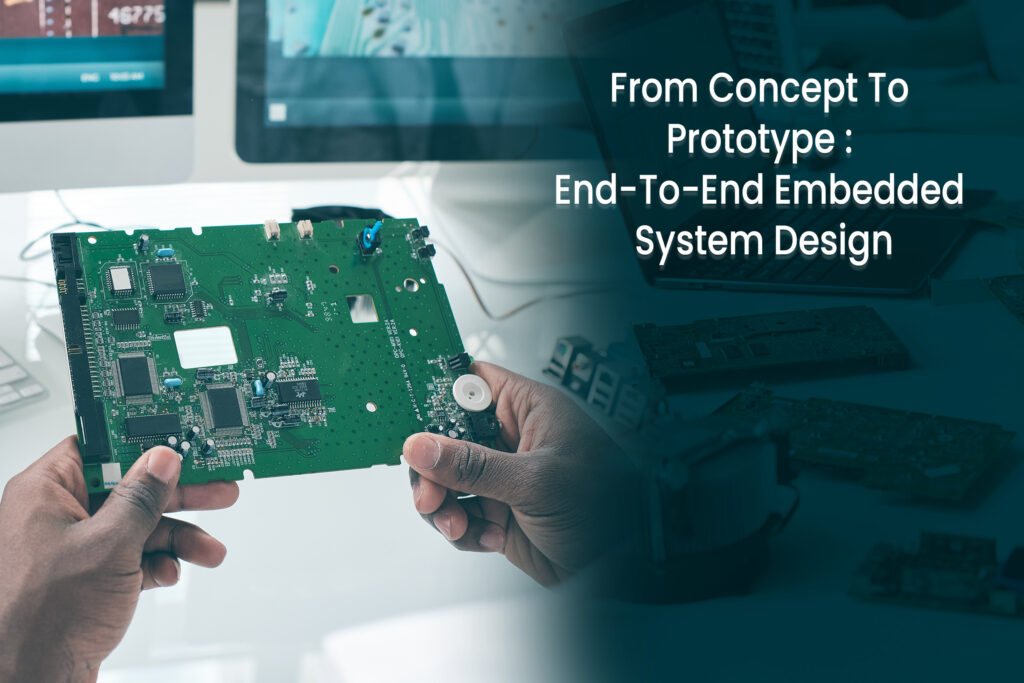
In the most conceptual terms, an embedded system is a computer system developed for a specific purpose. Embedded systems combine computer hardware and software, often incorporated into larger machinery.
Embedded systems are developed to perform tasks like collecting, processing, and managing data, and providing a user interface. From calculators, washing machines, and ATMs to pacemakers and airbag systems, everything is an example of embedded systems in use. This guide on end-to-end embedded system design
will inform you about all the decisions that go into designing embedded systems.
Embedded systems are designed for specific tasks and require a unique set of hardware and software. Hardware requirements of these systems include microcontrollers, memory space, sensors, power management, etc. You also require unique software like programming languages, development tools, Real-Time Operating Systems, firmware, etc.
As mentioned earlier, embedded systems are present everywhere in our daily lives. Here are some examples of embedded systems:
Home appliances like washing machines, microwaves, TVs, security systems, etc., all use embedded systems.
Embedded systems are used to monitor automated and industrial processes, such as temperature and pressure, and also control the movement and functions of robots in industrial settings.
Embedded systems have been very useful in the medical industry. There have been a lot of inventions and advancements that have been possible due to embedded systems.
Some of these are medical equipment like pacemakers, insulin pumps, etc. A lot of imaging devices were also invented using embedded systems, like MRIs and CT scans. Machinery with embedded systems is also used to monitor patients.
The aeronautics/aerospace industry has also made inventive use of this technology. Now, embedded systems are used for space exploration, navigation systems, and aircraft control models.
Automobiles encompass a lot of various embedded systems. Everything from the engine function, GPS, ABS(anti-locking braking system), entertainment systems, cruise control, etc, is managed by embedded systems.
Embedded systems are used in our mobile phones for communication and display functions. Satellites and network equipment also use embedded systems for communication and infrastructure.
Other than these industries, embedded systems are also being used in financial systems, machinery used in agriculture, radar systems, defense models, etc.
In order to design an embedded system, you need to select the hardware and microcontrollers that are compatible with your machinery’s requirements. This step is the most important in the Embedded system design process.
Since there are multiple options to choose from, you need to carefully consider factors such as processing power, memory space required, power requirements, peripherals, and costs.
Depending on the machinery and the purpose of the system, you may also require sensors. After carefully considering these factors, look for the microcontroller that best suits the purpose of the system being designed.
Firmware Architecture And Software Integration
Firmware architecture and software integration are fundamental processes of designing embedded systems. These processes help you define how the hardware and software will interact to achieve the specified tasks.
Firmware architecture is the structural design and arrangement of the firmware that manages the hardware. You need a well-structured firmware for optimal performance and reliable and expandable embedded systems. A well-defined firmware’s key elements are an operating system, bootloaders, device drivers, etc.
Software integration is used to design more complex features and increase connectivity within the system. It’s necessary to make sure that your hardware and software are interacting and communicating smoothly. Usually, software integration involves integrating third-party software, using libraries and modules to enhance functions, and developing a user interface.
Prototyping And Pcb Design Consideration
As per product design services experts, prototyping is an industry practice that helps understand and test the functionality of a program before committing to a full-scale model. Prototypes help the creators to identify potential flaws in functions and design, so these issues can be avoided and refined.
It also helps to examine the integration of hardware and software in the design. There are various methods to create prototypes. You can use the breadboard method, which involves a physical representation of the system and helps test the functionality of the design. Nowadays, it is more common to use advanced technology like simulation and emulation to create a virtual prototype.
PCB, Printed Circuit Board, design is very crucial for system reliability, performance, and manufacturability. Signal integrity, power distribution, thermal control, and electromagnetic compatibility (EMC) are some of the factors that go into PCB designing. Make sure to follow proper component placement, stackup planning, and design rules to create a successful PCB design.
Testing, Debugging, And Iterative Improvements
It is standard practice to test any sort of programs and software to understand their functionality in the end-to-end embedded system design process. Testing in embedded systems is focused on authenticating the software and hardware components and their integration. There are some common types of testing in embedded systems:
The process of identifying and resolving the issues uncovered via testing is known as the debugging process. The debugging process is crucial to managing the functionality of the design.
The debugging process involves understanding the core issue of the errors, hardware and software interaction, and using debugging tools to fix the issues. GDB, Renode, OpenOCD, and Lauterbach TRACE32 are some of the most commonly used debugging tools currently in use.
Iterative improvement of embedded systems involves constant improvement of the system by going through design, implementation, testing, and feedback loops. Breaking down development into incremental steps makes it easier for you to adapt to changing requirements and incorporate user feedback, leading to a more stable and tailored end product.
There is a lot of forethought and hard work that goes into designing embedded systems. It is crucial to be aware of the functionality and requirements of your machinery or software before making decisions regarding the equipment to be used. It is also necessary to note that maintaining and improving such systems is as necessary as designing them. That’s it in this blog on end to end embedded system design. To know more about that, reach out to Daksh Kanya. We offer comprehensive product design services covering the end to end embedded system design.