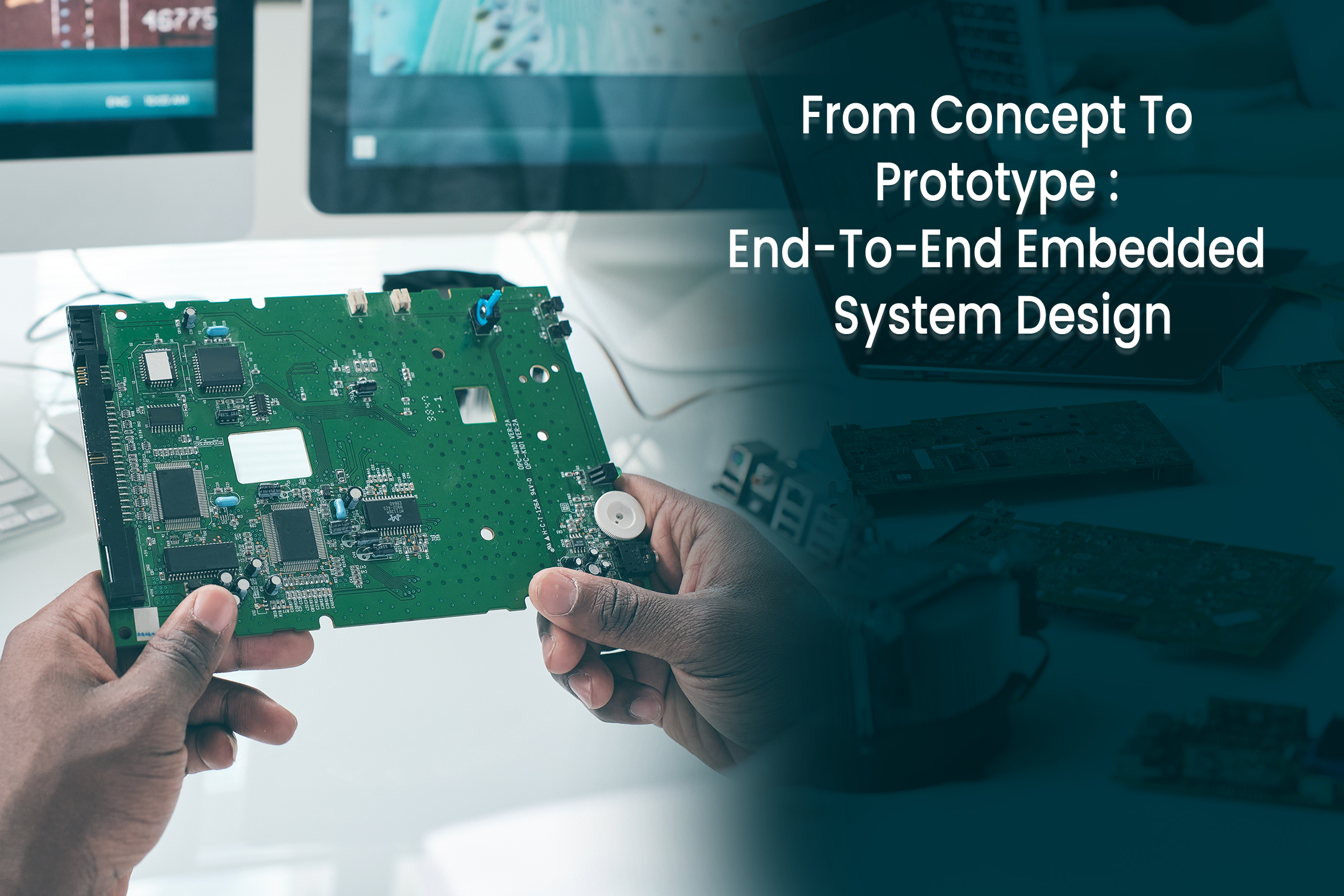
In the most conceptual terms, an embedded system is a computer system developed for a specific purpose, combining computer hardware and software, often incorporated into larger machinery to collect, process and manage data or provide a user interface.
From calculators, washing machines and ATMs to pacemakers and airbag systems, everything is an example of embedded systems in use. This guide covers all the key decisions that go into designing embedded systems from concept to production-ready prototype.
System Requirements and Use Cases
Embedded systems are designed for specific tasks and require a unique set of hardware and software. Hardware requirements include microcontrollers, memory, sensors, power management and connectivity. Software requirements include programming languages, development tools, Real-Time Operating Systems and firmware.
Embedded systems are present in consumer appliances (washing machines, TVs, security systems), industrial automation, medical devices (pacemakers, insulin pumps, MRIs), aeronautics and aerospace, automotive systems (engine control, GPS, ABS, entertainment), and communication infrastructure.
Selecting the Right Hardware and Microcontrollers
Selecting the hardware and microcontrollers is the most important step in the embedded system design process. You need to carefully consider processing power, memory space, power requirements, peripherals, connectivity needs and costs before selecting the microcontroller that best suits the purpose of the system.
Firmware Architecture and Software Integration
Firmware architecture is the structural design and arrangement of the firmware that manages the hardware. A well-structured firmware architecture's key elements include an operating system, bootloaders and device drivers. Software integration is used to design more complex features and increase connectivity, involving integration of third-party software, libraries and modules, and user interface development.
Prototyping and PCB Design
Prototyping is an industry practice that helps understand and test the functionality of a design before committing to a full-scale model. Prototypes help identify potential flaws in function and design early. Methods include the breadboard approach for physical testing and simulation/emulation for virtual prototypes.
PCB design is crucial for system reliability, performance and manufacturability. Signal integrity, power distribution, thermal control and electromagnetic compatibility (EMC) are all key considerations. Proper component placement, stack-up planning and adherence to design rules are essential for a successful PCB design.
Testing, Debugging and Iterative Improvements
Testing in embedded systems validates both software and hardware components and their integration. Common types include unit testing, system testing, integration testing, hardware testing, model-based testing and fuzz testing.
Debugging involves identifying and resolving issues uncovered via testing, understanding core errors, hardware-software interaction, and using tools such as GDB, Renode, OpenOCD and Lauterbach TRACE32. Iterative improvement through design-implementation-testing-feedback loops makes it easier to adapt to changing requirements and deliver a more stable and tailored end product.
Maintaining and continuously improving embedded systems is as important as designing them. Reach out to Daksh Kanya for comprehensive product design services covering the full end-to-end embedded system design journey.
Have a project in mind?
Talk to our embedded design experts for a free consultation.
Get Free Consultation